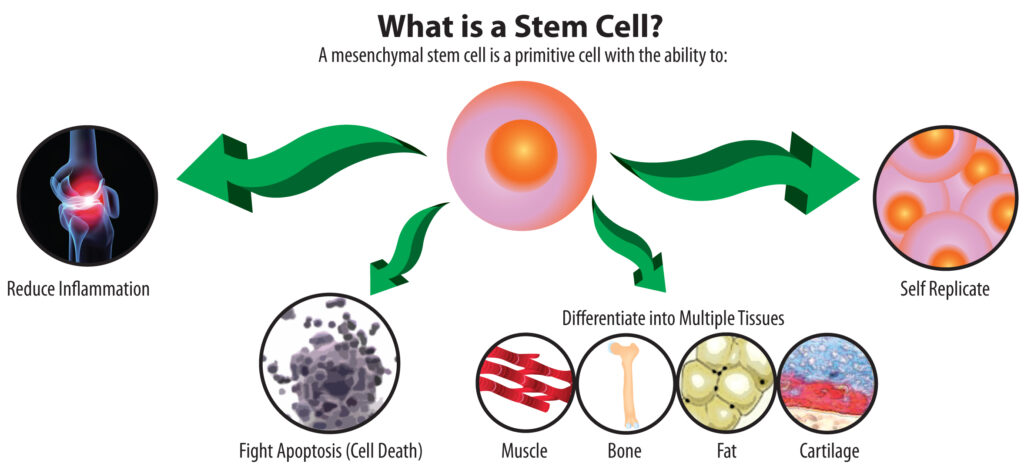
At present, stem cells are used exclusively for the treatment of joints and are not recommended for the treatment of soft tissues (tendons or muscles). Stem cell therapy is used in the following cases:
- for the treatment of cartilage injuries in younger patients, reducing inflammation and accelerating natural regeneration;
- stem cells are particularly effective in the early stages of osteoarthritis, where they reduce inflammation and slow the progression of osteoarthritis, creating favourable conditions for limited regeneration;
- in advanced osteoarthritis, the therapy can delay the need for surgical joint replacement (arthroplasty) for several years.
Mesenchymal stem cells in orthopaedics, particularly in the treatment of joints, significantly expand the therapeutic options available to patients. They can be harvested and isolated from either bone marrow or adipose tissue.
In addition to providing long-term reduction of inflammation through the active release of growth factors by the stem cells (whereas other biological treatment methods deliver only the growth factors themselves), stem cells are also capable of differentiating into bone, cartilage or tendon tissue. They also act by stimulating the surrounding tissue to regenerate.
Stem cells are typically injected only once, which should be sufficient to provide relief from symptoms for several years. However, in the event of subsequent deterioration, the treatment can be repeated.
The stem cells are harvested under local anaesthesia and, if necessary, sedation. They are obtained through a minimal incision and aspiration from the pelvic bone or tibia, or from adipose tissue in the abdominal area (limited liposuction).
The aspirate is centrifuged and then sterilely injected into the joint. The procedure is not painful. It is performed on an outpatient basis in an orthopaedic operating theatre.
After the application, a few days of rest are recommended. Physical and sporting activities can be resumed after several weeks.