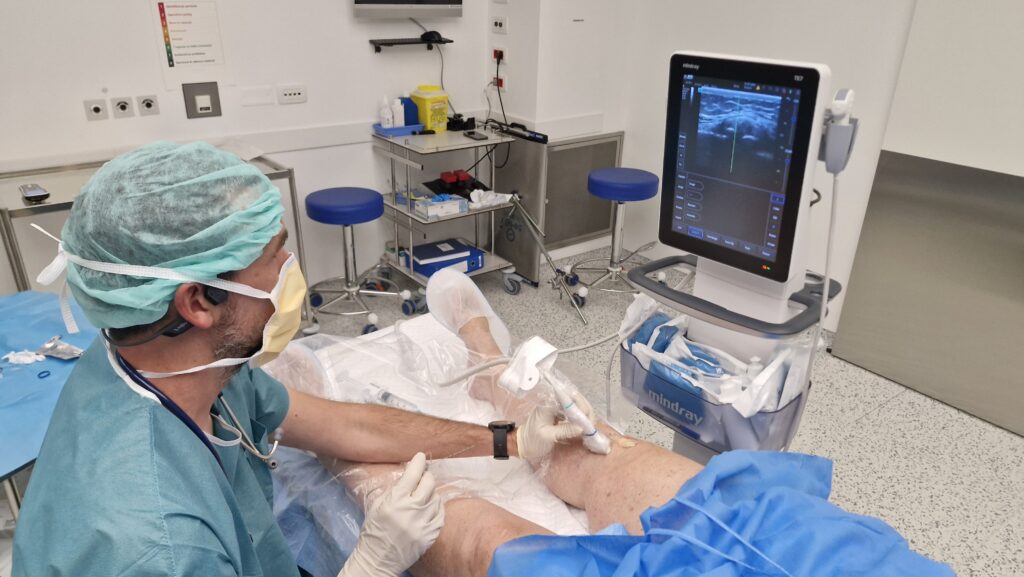
Cryoanalgesia (cryoneurolysis) is a modern, minimally invasive procedure in which a thin probe cooled to temperatures well below freezing is used to selectively freeze the sensory nerve that transmits pain from the joint. It is intended to provide longer-lasting pain relief when a short-acting nerve block has demonstrated a good effect.
How Does It Work?
A small ice ball forms around the tip of the probe. The cold temporarily interrupts conduction in the nerve fibers, while the nerve sheaths remain intact, allowing the nerve to gradually regrow (approximately 1–1.5 mm per day). The effect is therefore temporary and reversible and generally lasts from several weeks to several months. In studies involving the knee, the effect has lasted approximately 3 months, while in some patients it may last longer. When pain increases again, the procedure can be repeated. The procedure does not place a medication burden on the body.
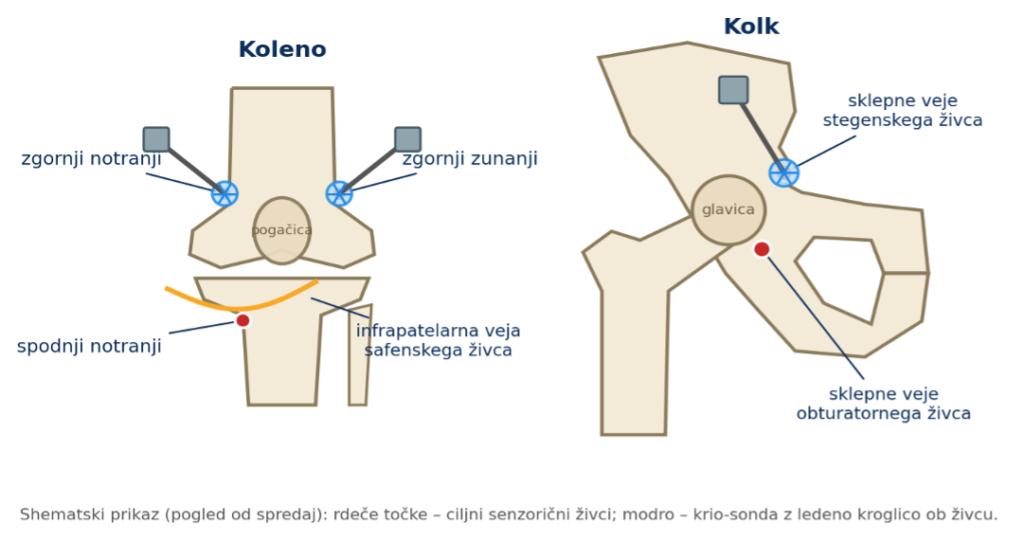
Which Nerves Are Treated?
Knee: sensory nerves around the knee are frozen, including the genicular nerves and/or the infrapatellar branch of the saphenous nerve and the anterior cutaneous nerves of the thigh.
Hip: the articular branches of the femoral and obturator nerves are frozen. These nerves supply the anterior part of the joint capsule. The use of cryoanalgesia for the hip is more recent and less extensively studied than its use for the knee.
How Is the Procedure Performed?
First, a clinical assessment and diagnostic nerve block are performed. If the block significantly reduces the pain, cryoanalgesia is planned.
You lie on your back while the skin is disinfected and locally anesthetized. The nerve is identified using ultrasound, after which a thin probe is inserted through a small puncture and the target area is frozen for several minutes. The procedure is repeated at all targeted sites.
The procedure takes approximately 30–60 minutes. You can go home the same day and walk immediately afterwards.
After the Procedure and Possible Side Effects
Mild pain, swelling or bruising at the puncture site may occur for a few days. The skin over the treated area may be less sensitive or may feel tingly for several weeks. Infection or changes in skin color are rare.
When Is the Procedure Not Suitable?
The procedure is not suitable for patients with cold hypersensitivity (cold urticaria, cryoglobulinemia or Raynaud’s disease), an infection or wound at the treatment site, or blood-clotting disorders.
Any anticoagulant medication must always be discussed and appropriately managed before the procedure.
Realistic Expectations
The response to treatment varies from person to person, and studies have shown different results.
Cryoanalgesia does not cure osteoarthritis, but it works best as part of a comprehensive treatment plan that includes therapeutic exercise and physiotherapy.
Sources: Radnovich et al., Osteoarthritis Cartilage 2017;25:1247–56; Nygaard et al., Anesthesiology 2025;142:1114–26; Pain Medicine 2024 (pnae016) – radiofrequency treatment of the articular branches of the hip; Annals of Palliative Medicine 2024 – hip denervation.