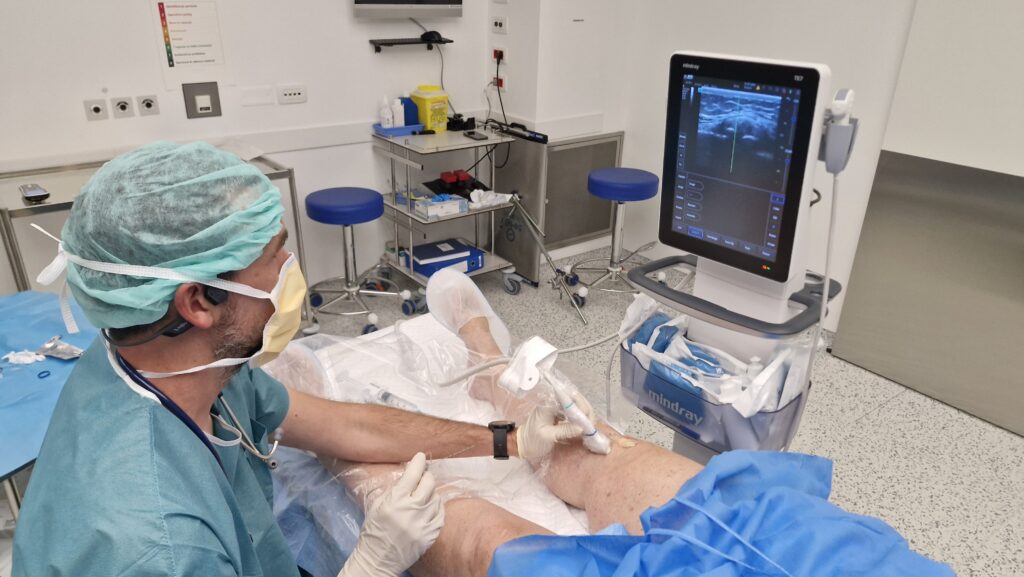
The knee joint is supplied by small sensory branches of nerves known as the genicular nerves, which transmit pain from the joint capsule. During a genicular nerve block, a local anesthetic is injected near these nerves under ultrasound guidance, with a corticosteroid added if necessary.
Why Is It Performed? – Two Purposes
Pain relief: the nerve block quickly reduces pain. Adding a corticosteroid may prolong the effect for several weeks, although the duration varies from person to person.
Identifying the source of pain: if the pain is significantly reduced (by at least 50%) in the hours following the block, this suggests that the pain originates from the knee itself and that the patient may be a suitable candidate for longer-lasting treatment with cryoanalgesia. If there is no pain relief, another source is investigated, as knee pain can also be referred from the hip or spine. The response to the block is an important diagnostic indicator, but it is not a completely reliable predictor of the success of subsequent treatment.
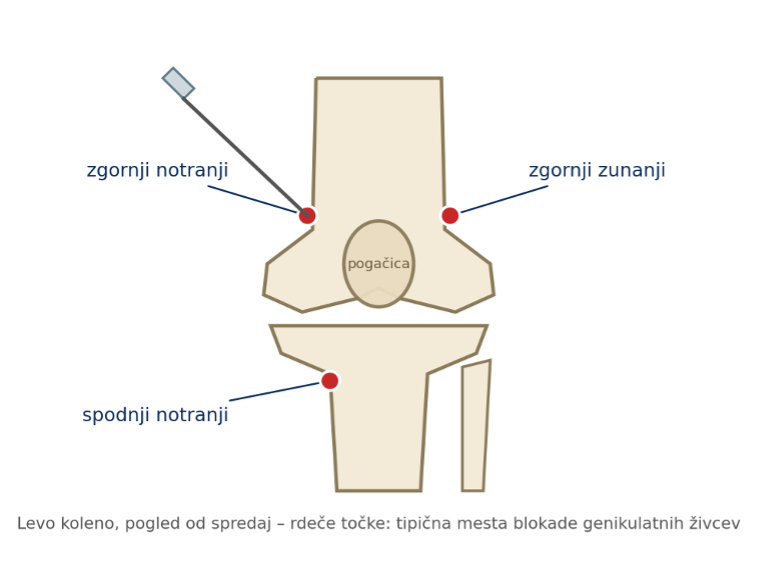
How Is the Procedure Performed?
The procedure is performed on an outpatient basis and takes approximately 15–20 minutes. You lie on your back with the knee slightly supported. The skin is disinfected, and ultrasound is used to identify the areas near the bone where the nerves run (usually the superolateral, superomedial and inferomedial regions of the knee). The medication is then injected using a fine needle. The injection is similar to a routine injection.
After the procedure, you will be asked to record the intensity of your pain for several hours during activities that normally cause pain, such as walking, standing up and climbing stairs. This helps assess the effect of the block.
After the Procedure
You can return home. The skin around the knee may be less sensitive for several hours. Because the sensory branches are targeted, muscle strength is generally preserved. However, the leg may feel slightly weaker for a few hours, so you should take care when walking.
An escort is required: you must attend the procedure accompanied by an adult who can take you home. You must not drive on the day of the procedure.
Possible Complications
Complications are rare and may include bruising or pain at the injection site and, very rarely, infection or an allergic reaction.
In patients with diabetes, corticosteroids may increase blood glucose levels for several days or cause temporary facial flushing.
Before the procedure, you must inform us if you are taking blood-thinning medication.
Sources: BJA Education 2024;24(5) – radiofrequency denervation of the knee; Pain Medicine 2021;22(S1):S20 – genicular nerve blocks and RFA; Osteoarthritis Cartilage 2025 – meta-analysis of interventions targeting the genicular nerves.