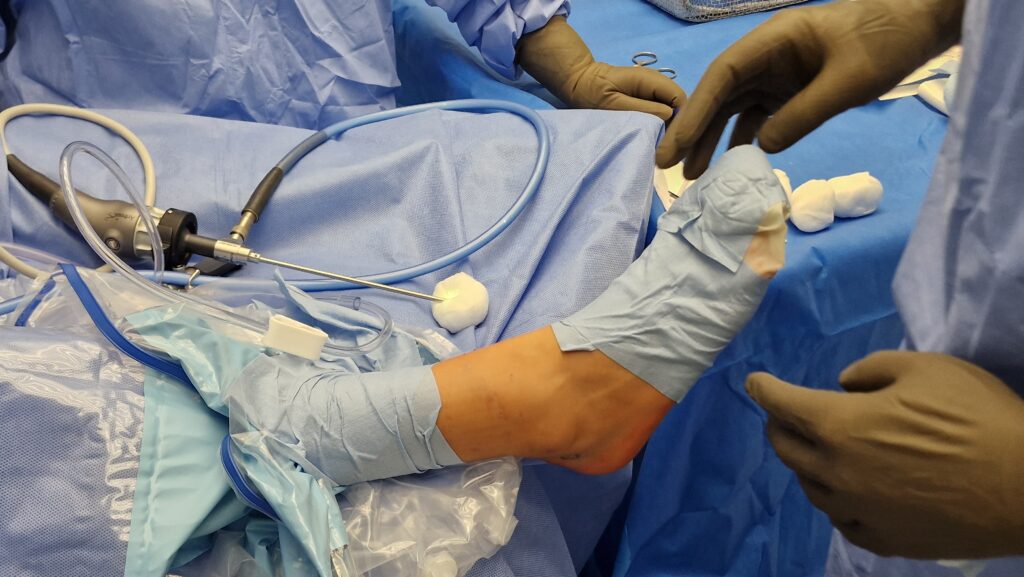
Ankle arthroscopy is a minimally invasive surgical procedure in which the surgeon examines the inside of the joint in detail through small skin incisions and treats specific injuries and pathological conditions. Common indications include articular cartilage injuries, loose bone or cartilage fragments, adhesions and inflamed tissue. The surgeon may remove or treat loose bodies and scar tissue, as well as smooth or remove bone spurs that restrict movement.
These changes can cause pain, swelling, a catching or locking sensation, and limited mobility. Some injuries to the cartilage surface require additional procedures, such as drilling or repairing the damaged area. The procedure is performed under general or regional anaesthesia. Most simpler arthroscopic procedures can be carried out as day surgery, allowing patients to return home on the same day in most cases. Patients may temporarily need crutches after surgery. The surgeon determines how much weight can be placed on the affected leg, depending on the procedure performed.
Recovery depends on the type and extent of the injury and the procedure performed. After a simpler procedure involving soft tissues, recovery may take a few weeks. Procedures involving bone or cartilage may require a longer recovery period, with temporary restrictions on weight-bearing. Rehabilitation focuses on gradually restoring mobility, strength and safe walking. The medical team determines when full weight-bearing can resume based on each patient’s individual needs.
Ankle arthroscopy is also used to treat a condition known as ankle impingement syndrome. In this condition, bone spurs or thickened soft tissue come into contact during certain movements, restricting joint mobility. Treating these structures may therefore help relieve symptoms.