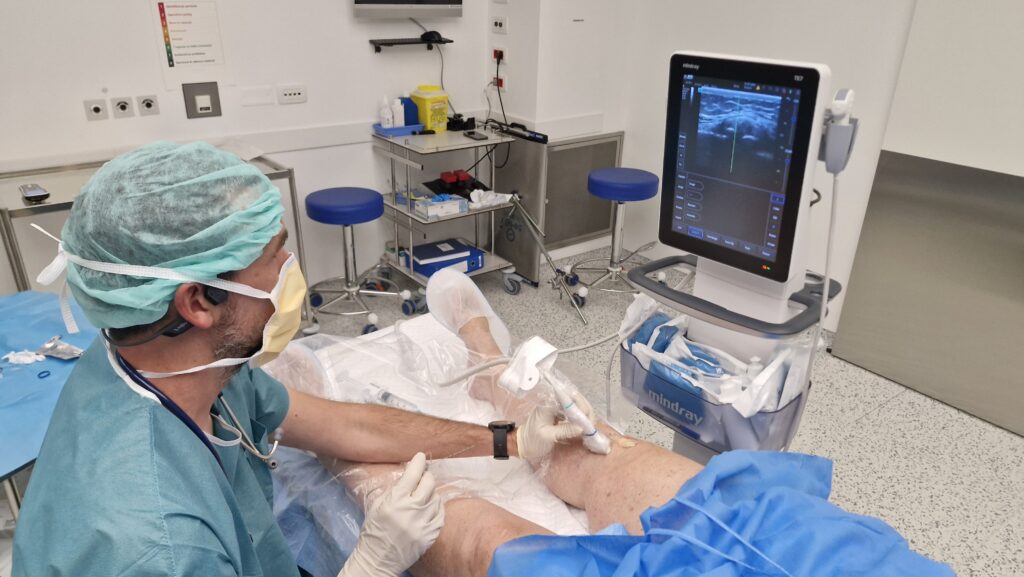
Persistent pain in the knee, hip or spine can significantly limit walking, sleeping, working and everyday activities. At the Bisturmed Pain Management Clinic, we focus specifically on the assessment and treatment of pain in these areas. Care is provided by an anesthesiologist with many years of experience in regional anesthesia and nerve blocks, which are performed under ultrasound guidance.
What do we offer?
Assessment of knee, hip and spinal pain: consultation, clinical examination and review of previous test results and imaging (X-rays, MRI and ultrasound). Together, we try to determine the most likely source of the pain.
Advice on pain medication: we review the medications you are already taking, provide advice on medication selection, dosage and combinations, and inform you about possible side effects and interactions with other medications.
Pain-relieving nerve blocks: a local anesthetic, sometimes combined with a corticosteroid, is injected near the nerves that transmit pain from the joint. We offer a range of nerve blocks for these areas, including genicular nerve blocks of the knee, blocks of the articular branches of the nerves supplying the hip (e.g. PENG block), and nerve blocks in the spinal region. The block relieves pain and can also help confirm its source.
Longer-lasting pain relief with cryoanalgesia: if the nerve block proves effective, cryoanalgesia can be performed. This involves targeted freezing of sensory nerves and can provide pain relief for several weeks to several months.
Who is the treatment intended for?
- patients with osteoarthritis of the knee or hip for whom medication and physiotherapy are not sufficient;
- patients who are waiting for surgery, are not yet ready for surgery, or are not suitable candidates for surgery because of other medical conditions;
- patients with persistent pain following knee or hip surgery and those with chronic spinal pain;
- patients who do not tolerate pain medication well or who would like to reduce their use of painkillers.
What can you expect?
Pain-relieving procedures do not cure osteoarthritis, but they can reduce pain and make movement easier. This can make it easier to participate in exercise and physiotherapy, which remain the foundation of treatment. The response to treatment varies from person to person, so the treatment plan is always tailored individually and, when necessary, developed in cooperation with your orthopedic specialist or primary care physician.
How to prepare for your appointment
Bring any previous test results and imaging studies, as well as a list of all medications you are taking. In particular, inform us if you take blood-thinning medication, have diabetes or have any allergies.
For a pain-relieving nerve block, you must be accompanied by an adult who can take you home. You must not drive on the day of the procedure.