
The anterior part of the hip joint capsule is supplied by small articular branches of the femoral, obturator and accessory obturator nerves, which transmit pain from the joint. These nerves run close to the bone between two bony prominences of the pelvis. A PENG block (pericapsular nerve group block) involves injecting a local anesthetic at this site under ultrasound guidance, with a corticosteroid added if necessary.
Why Is It Performed? – Two Purposes
Pain relief: the block rapidly reduces hip pain. In a study of patients with hip osteoarthritis, it improved pain and mobility for up to two months, although the duration of the effect varies from person to person.
Identifying the source of pain: pain in the hip region does not always originate from the joint. It may come from the spine, the sacroiliac joint, or the tendons and bursae around the hip. If the pain is significantly reduced (by at least 50%) after the block, this suggests that the joint is the source of the pain and that longer-lasting treatment with cryoanalgesia of the articular branches may be considered.
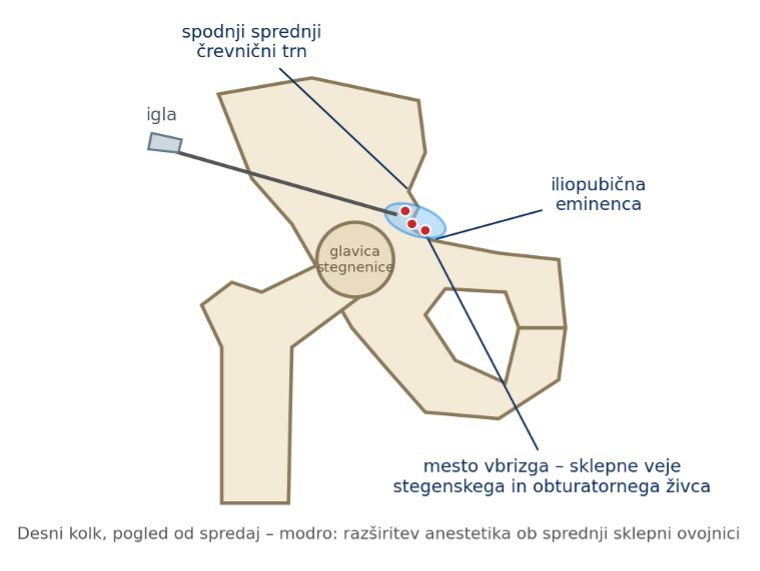
How Is the Procedure Performed?
The procedure is performed on an outpatient basis and takes approximately 15–20 minutes. You lie on your back. The skin in the groin area is disinfected and locally anesthetized. Ultrasound is used to visualize the bone and surrounding structures, after which the medication is injected with a fine needle next to the anterior joint capsule.
After the procedure, you will be asked to record the intensity of your pain for several hours during activities that normally cause pain, such as walking, standing up from a chair and putting on your shoes.
After the Procedure – Important
The anesthetic may also spread to the femoral nerve, which can temporarily weaken the muscles at the front of the thigh for several hours and reduce sensation in the thigh. This increases the risk of falling.
The first time you get up, you should have assistance. Walk carefully and, if necessary, use support such as crutches until full muscle strength has returned.
An escort is required: you must attend the procedure accompanied by an adult who can take you home and, if possible, stay with you for the rest of the day. You must not drive on the day of the procedure.
Possible Complications
Complications are rare and may include bruising or pain at the injection site and, very rarely, infection, bleeding or an allergic reaction.
In patients with diabetes, corticosteroids may increase blood glucose levels for several days.
Before the procedure, you must inform us if you are taking blood-thinning medication.
Sources: Korean J Pain 2023;36(2):195–207 – PENG vs. intra-articular corticosteroid for hip osteoarthritis; JA Clinical Reports 2023 – PENG for chronic hip pain; Frontiers in Medicine 2026 – ultrasound-guided blocks for osteoarthritis.